

 English
 中文简体
中文简体
TURKEY DISTRIBUTOR:
Submit feedback

Gloss Stability in Semi-Bright Release Paper Prevents Luggage Leather Surface Defect
Luggage leather is judged by its surface appearance long before its durability is tested. Under store lighting, consumers notice whether the grain is crisp, whether the sheen is uniform, and whether the finish looks intentional or accidental. For synthetic luggage leather, most of those visual qualities are decided by a single consumable: the high-temperature release paper that transfers texture and gloss onto the resin surface. When that paper is a semi-bright grade, one property matters above all others: gloss level stability.
Gloss level stability means the release paper delivers the same light-reflection behavior across its full width, from roll to roll, and through repeated casting cycles. When this stability breaks down, the luggage leather develops visible surface defects such as cloudy patches, uneven sheen, and weak grain reproduction. This article explains why gloss stability is the decisive factor in semi-bright release paper for luggage leather, how gloss fluctuation causes defects, and what should be checked when selecting a reliable paper supply.
Content
- 1 What Gloss Level Stability Means in Semi-Bright Release Paper
- 2 How Gloss Fluctuation Creates Surface Defects in Luggage Leather
- 3 Key Factors That Support Gloss Stability in Production
- 4 Matching Semi-Bright Release Paper to Luggage Leather Textures
- 5 Practical Quality Checks for Gloss Stability
- 6 Frequently Asked Questions
- 6.0.1 Q1: What is the main cause of uneven gloss in luggage leather production?
- 6.0.2 Q2: Can semi-bright release paper provide gloss stability over multiple reuse cycles?
- 6.0.3 Q3: How does gloss level stability relate to demolding performance?
- 6.0.4 Q4: What is the difference between semibright and semimatte release paper?
What Gloss Level Stability Means in Semi-Bright Release Paper
Semi-bright release paper occupies the zone between semimatte and full gloss. It is designed to produce a leather surface with a soft, elegant shine that still shows texture clearly. In the product language of release paper manufacturers, this finish is often called semibright or semigloss. The paper's release coating receives the liquid PVC or PVC/PU resin, and during the high-temperature casting process it determines two things at once: how deeply the texture is pressed into the leather and how much light the final surface reflects.
Gloss level stability has three practical dimensions:
- Cross-web uniformity: the same gloss reading at the edges and in the middle of the paper web.
- Run-to-run consistency: the same gloss performance from the beginning of a roll to the end, and across different rolls in the same batch.
- Thermal durability: the ability to keep gloss values stable when the paper is repeatedly exposed to the high temperatures of the casting line.
A complete guide to semi-bright release paper selection explains why buyers should evaluate these three dimensions together instead of looking only at the initial gloss value.
Gloss stability is not a feature of the paper alone. It is the result of release coating formulation, base paper structure, and thermal behavior working together under production conditions.
How Gloss Fluctuation Creates Surface Defects in Luggage Leather
When a semi-bright release paper cannot hold its gloss level, the defect appears not in the paper itself but in the leather that is cast against it. The resin layer replicates the paper surface in microscopic detail. Gloss differences in the paper translate directly into gloss differences in the luggage leather. The most common defects include cloudy patches, uneven light reflection, reduced texture depth, and a washed-out appearance on large flat panels.
The table below maps typical luggage leather surface defects to their gloss-related causes and explains how a stable semi-bright release paper helps prevent them.
| Surface Defect | Gloss-Related Cause | How Stability Prevents It |
|---|---|---|
| Cloudy patches | Localized gloss differences in the release coating | Uniform coating distribution keeps reflection even |
| Uneven sheen between panels | Gloss drift from one roll to the next | Run-to-run consistency keeps batch appearance aligned |
| Shallow or blurred grain | Inconsistent release force during demolding | Stable surface energy preserves texture depth |
| Orange-peel effect | Uneven resin release under heat | Thermally stable paper prevents localized sticking |
For luggage brands, these defects are costly because they are usually detected only after the full casting and finishing cycle. By then, the entire batch of leather must be reworked or scrapped. Using release paper with verified gloss stability is therefore a preventive measure, not an aesthetic preference.
Key Factors That Support Gloss Stability in Production
Gloss stability is built into the release paper during manufacturing. Four factors determine whether a semi-bright grade can hold its gloss under the demanding conditions of luggage leather production.
Release Coating Uniformity
Precision coating with consistent dry film thickness prevents micro-areas of higher or lower gloss from forming.
Base Paper Structure
A dense, well-calendered base paper provides a smooth foundation so the coating can cure evenly at high temperature.
Thermal Resistance
The paper must withstand repeated heating without the coating migrating, yellowing, or changing its reflective character.
Storage and Aging Behavior
Stable semi-bright paper absorbs less moisture and resists surface oxidation, so gloss does not drift during warehouse storage.
These factors matter more in luggage leather because luggage panels often use large uninterrupted surface areas. A defect that might be hidden by stitching or embossing on a sofa armrest is immediately visible on the smooth side panel of a suitcase.
Matching Semi-Bright Release Paper to Luggage Leather Textures
Texture and gloss are not independent decisions. A fine texture reflects light differently from a deep-grain texture; therefore, each luggage leather design needs a semi-bright release paper whose texture depth and gloss level are manufactured to match. Manufacturers can find the full range of release paper for luggage leather production organized by usage and finish. The following series are typical choices for semi-bright luggage applications.
Gemstone Series for Decorative Panels
The H358 gemstone semibright release paper creates a compact, elegant surface that works well for decorative luggage panels and business-case exteriors. Its semi-bright finish adds a restrained shine while the gemstone texture gives the leather a high-end, non-repetitive visual rhythm. Gloss stability in this grade keeps the decorative effect uniform across the whole panel.
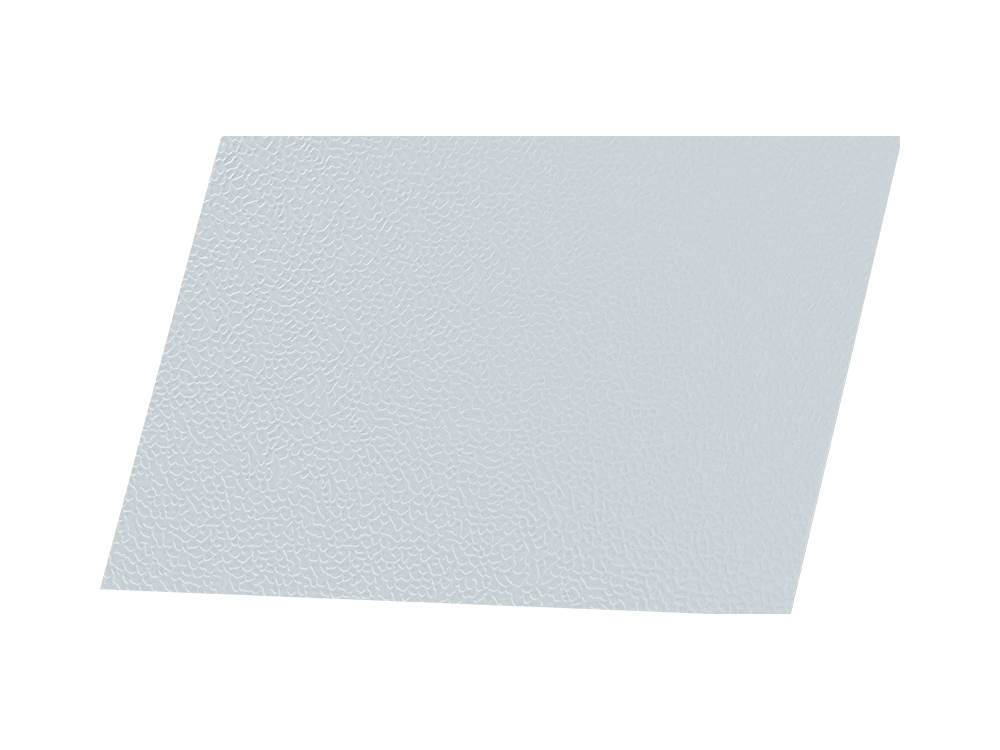 H358 Gemstone Semi-bright High Temperature Release Paper for Decorative LeatherThis release paper creates a compact gemstone texture with a restrained semi-bright gloss, suitable for elegant luggage panels and business-case exteriors. Its stable finish helps maintain a uniform decorative effect across the leather surface.View Product →
Lychee Texture Series for Classic Luggage Grain
Lychee grain is one of the most requested textures in luggage leather because it hides minor scratches and feels comfortable in the hand. The H558 large lychee semibright release paper suits bold, classic luggage bodies, while the H658 small lychee semibright release paper is better for compact accessories and softer hand-feel requirements. Both grades keep the semi-bright gloss evenly seated in the valleys and peaks of the grain, preventing the washed-out look that occurs when gloss is unstable.
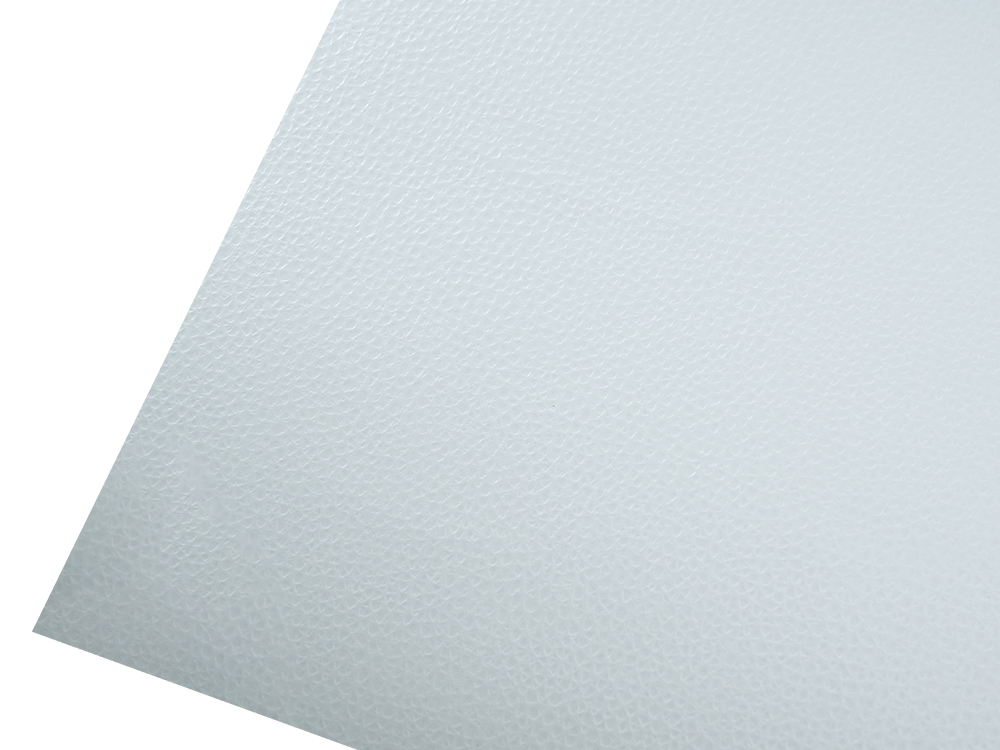 H558 Large Lychee Pattern Semi-bright High Temperature Release Paper for LuggageIdeal for bold, classic luggage bodies, this release paper provides a large lychee grain that hides minor scratches and offers comfortable hand-feel. The stable semi-bright gloss prevents washed-out appearance on textured leather surfaces.View Product →
Plain Series for Smooth, Modern Luggage Surfaces
For minimalist luggage collections, a plain semi-bright surface is often preferred. The H858 plain semibright release paper delivers a clean, smooth base with controlled light reflection. Because there is no texture to distract the eye, gloss stability becomes the only thing protecting the surface from visible defects; any fluctuation would immediately appear as a shiny or dull spot.
 H858 Plain Semi-bright High Temperature Release Paper for Smooth SurfacesDesigned for minimalist collections, this plain release paper delivers a clean, smooth base with controlled light reflection. Gloss stability is critical here, as any fluctuation would create visible shiny or dull spots on the leather.View Product →
Practical Quality Checks for Gloss Stability
Before a semi-bright release paper enters a luggage leather production line, its gloss stability should be verified. A simple incoming inspection routine can prevent costly surface defects downstream.
- Visual gloss benchmark: compare a sample sheet of the paper with an approved reference under a standard light source.
- Cross-web check: measure gloss near the left edge, center, and right edge of the roll to confirm uniformity.
- Pilot coating trial: cast a small PVC or PVC/PU sample and examine the resulting leather for blotchiness or uneven sheen.
- Batch comparison: test rolls from different production dates side by side to confirm run-to-run consistency.
If the paper passes these simple checks at the warehouse stage, the risk of gloss-related defects in the finished luggage leather drops significantly.
Frequently Asked Questions
Q1: What is the main cause of uneven gloss in luggage leather production?
Uneven gloss is usually caused by a release paper whose coating thickness or surface energy varies across the web. These variations transfer directly to the resin layer during casting, creating cloudy patches and inconsistent sheen on the finished luggage leather.
Q2: Can semi-bright release paper provide gloss stability over multiple reuse cycles?
High-temperature release paper is designed for repeated use, and semi-bright grades with thermally stable coatings maintain their gloss performance over multiple cycles. After each cycle, the paper should be inspected for coating wear or surface contamination that could alter gloss.
Q3: How does gloss level stability relate to demolding performance?
A stable gloss level indicates that the release coating is evenly cured and uniformly anchored to the base paper. This uniformity also produces consistent release force during demolding, which prevents localized sticking and preserves both the texture and the gloss of the leather surface.
Q4: What is the difference between semibright and semimatte release paper?
Semi-matte release paper produces a lower light reflection and a softer, more subdued surface, while semi-bright release paper delivers a higher, more lively sheen. Semi-bright grades are more sensitive to gloss variation because the human eye detects reflection differences more easily at higher gloss levels.
Gloss level stability is not a luxury specification; it is the core requirement for producing luggage leather that looks consistent, expensive, and defect-free. Semi-bright release paper earns its value only when it can hold the same gloss behavior across the full web, throughout the roll, and over repeated thermal cycles. By understanding how gloss fluctuation creates surface defects, verifying stability with routine quality checks, and choosing a release paper family that matches the intended luggage leather texture, manufacturers can protect both their yield and their brand reputation.

Feel free to contact us now!
We provide customers with sustainable and environmentally friendly release paper products and services.


-

-
 INDIA DISTRIBUTOR:
 -
 ITALY DISTRIBUTOR:
 -
 PAKISTAN DISTRIBUTOR:
Copyright © Anhui Honghuan New Material Technology Co., Ltd. Rights Reserved.
Custom Casting Release Paper Factory