

 English
 中文简体
中文简体
TURKEY DISTRIBUTOR:
Submit feedback

Leather Release Paper Guide: PVC, PU & Synthetic Leather Applications
Content
- 1 What Is Leather Release Paper and Why It Determines Surface Quality
- 2 How Leather Release Paper Works in PVC and PU Leather Production
- 3 Release Paper Construction: Base Paper, Coating, and Surface Pattern
- 4 Key Technical Specifications for PVC and PU Leather Release Paper
- 5 Application Sectors and Pattern Selection Criteria
- 6 Sourcing Criteria and Quality Evaluation for Leather Release Paper
What Is Leather Release Paper and Why It Determines Surface Quality
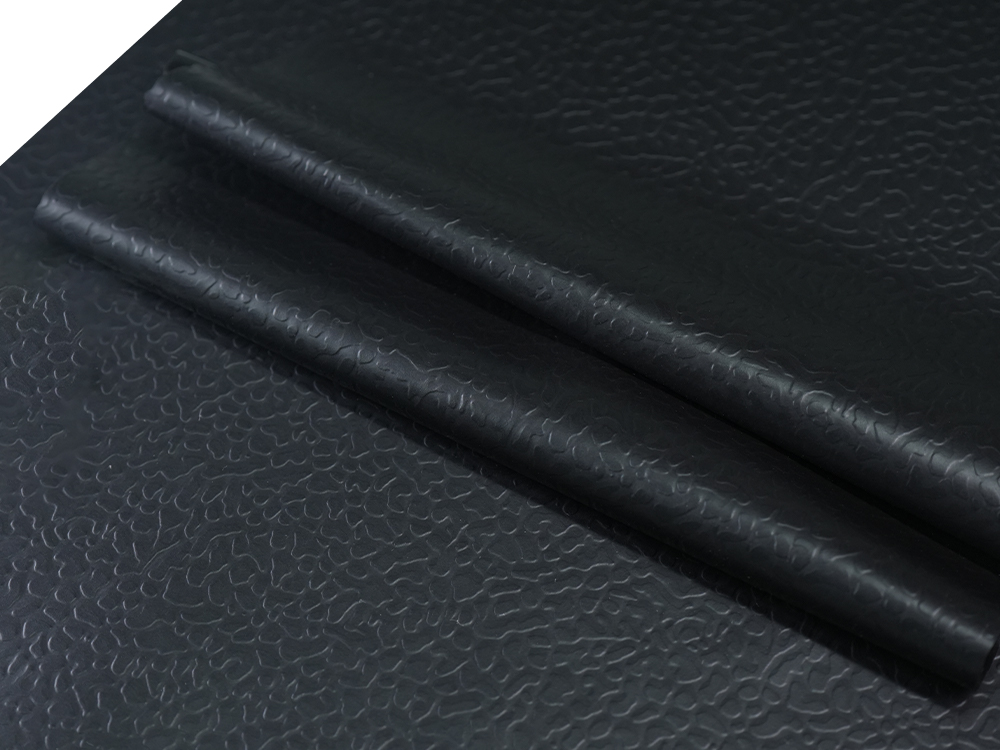
Leather release paper is a structured carrier substrate used in the manufacture of synthetic leather—both PVC (polyvinyl chloride) and PU (polyurethane) varieties—to impart surface texture, control gloss level, and provide a temporary support during coating and lamination processes. The release paper is not a component of the finished leather product; it is a production tool that is peeled away after the synthetic leather has been cured or cooled, transferring its surface pattern in mirror image to the leather's outer face.
The surface quality of every square meter of synthetic leather produced on a coating line is therefore a direct function of the release paper used. Grain definition sharpness, gloss uniformity, emboss depth, and surface defect rate are all determined at the release paper interface—not by the coating formulation alone. A manufacturer producing premium automotive interior leather or high-end furniture upholstery fabric who specifies substandard release paper will be unable to achieve the required surface standard regardless of coating chemistry or processing conditions.
How Leather Release Paper Works in PVC and PU Leather Production
The functional principle of leather release paper is consistent across PVC and PU leather manufacturing, though the processing conditions differ significantly between the two chemistries.
PVC Leather Release Paper Process
In PVC leather production, a plastisol compound—PVC resin dispersed in plasticizer—is knife-coated or roller-coated onto the release paper surface at a controlled film weight, typically 180–350 g/m² depending on the product specification. The coated paper then passes through a continuous oven at temperatures of 170–210°C for gelation and fusion of the PVC compound. At these temperatures, the release paper must maintain dimensional stability, resist wrinkling, and retain its surface texture geometry without deformation. After cooling, a textile backing fabric is laminated to the PVC film with adhesive, and the release paper is peeled away and wound for reuse. PVC leather release paper must therefore withstand repeated thermal cycling at fusion temperatures—a demanding requirement that determines the paper's usable run length before surface degradation affects leather quality.
PU Leather Release Paper Process
PU leather manufacturing uses either a wet process (coagulation in DMF/water bath) or a dry process (solvent or waterborne PU coating cured by heat). In the dry process—the dominant method for release paper-based PU leather—a polyurethane surface coat is applied to the release paper at 80–150 g/m², dried at 80–130°C, then laminated to a knit or woven fabric substrate with a PU adhesive layer. Processing temperatures for PU leather release paper are lower than for PVC fusion, but the chemical environment introduces additional requirements: the release coating on the paper must resist partial dissolution or swelling from the solvents present in the PU formulation while still releasing cleanly after curing. Solvent resistance and release force consistency are therefore the critical performance parameters for PU leather release paper, whereas thermal stability at high temperature is the primary requirement for PVC applications.
Release Paper Construction: Base Paper, Coating, and Surface Pattern
Leather release paper is a multi-layer composite, and the performance of the finished product depends on the quality and compatibility of each layer in the construction.
Base Paper Substrate
The base paper provides dimensional stability, tensile strength, and heat resistance for the entire construction. Kraft pulp papers with basis weights of 120–180 g/m² are standard for most leather release paper grades. For high-temperature PVC applications, papers impregnated with thermosetting resins—particularly melamine-formaldehyde or phenol-formaldehyde—are used to achieve the dimensional stability required at fusion oven temperatures without calendering-induced cockling or edge curl that would cause tracking problems on the coating line. Moisture content control of the base paper is critical: papers entering a high-humidity coating environment with variable moisture content produce dimensional instability that manifests as register errors in multi-pass coating operations.
Release Coating Chemistry
The release coating is applied to the base paper surface and determines the fundamental peel force, chemical resistance, and reuse capability of the finished release paper. Three coating chemistries dominate the leather release paper market:
- Silicone release coatings — Crosslinked polydimethylsiloxane systems applied at 1.0–2.5 g/m² provide the lowest and most consistent release forces across a wide temperature range. Silicone coatings are compatible with both PVC and PU chemistries and offer excellent thermal stability up to 220°C. The primary limitation is cost; silicone-coated release papers are significantly more expensive than polyolefin alternatives and are reserved for applications requiring the most demanding surface quality standards.
- Polyolefin (PE/PP) extrusion coatings — Polyethylene or polypropylene extruded onto the base paper at 15–30 g/m² provides a cost-effective release surface with good chemical resistance to PVC plastisol. Polyolefin-coated papers are the most widely used base for embossed leather release paper because the thermoplastic coating can be embossed with a heated pattern roll to produce virtually any grain geometry. Thermal resistance is limited to approximately 130–150°C continuous, restricting their use to lower-temperature PU leather lines and select PVC formulations with lower fusion temperatures.
- Acrylic and alkyd lacquer coatings — Solvent or water-based lacquer systems provide an intermediate option between silicone and polyolefin in terms of cost, release consistency, and thermal performance. Lacquer-coated papers are common in Asian leather manufacturing markets and are particularly used for PU leather production where solvent resistance requirements can be tuned by adjusting crosslinker concentration and coating weight.
Surface Pattern Embossing and Gloss Level
The surface texture transferred from release paper to synthetic leather is created by mechanical embossing of the release coating using engraved steel or chrome rolls at controlled temperature and nip pressure. Pattern libraries available from major release paper manufacturers encompass hundreds of grain geometries—full-grain cowhide, nappa, saffiano, crocodile, ostrich, carbon fiber, and geometric abstract patterns—across gloss levels from mirror (GU 90+) to ultra-matte (GU <2) measured at 60° geometry per ISO 2813. Gloss uniformity across the paper width is a critical quality parameter: variation exceeding ±3 GU at 60° is perceptible to the naked eye in finished leather and is a common cause of roll-to-roll color and appearance inconsistency in leather production.
Key Technical Specifications for PVC and PU Leather Release Paper
| Specification | PVC Leather Release Paper | PU Leather Release Paper | Test Method |
|---|---|---|---|
| Base paper weight | 140–180 g/m² | 120–160 g/m² | ISO 536 |
| Maximum operating temperature | 180–220°C | 120–150°C | Manufacturer test |
| Release force (peel at 180°) | 5–25 cN/cm | 3–15 cN/cm | FINAT FTM 10 |
| Tensile strength (MD) | ≥7.0 kN/m | ≥5.5 kN/m | ISO 1924 |
| Dimensional stability at temp. | ≤0.5% shrinkage at 200°C | ≤0.3% shrinkage at 130°C | Internal oven test |
| Reuse cycles (typical) | 15–40 passes | 20–60 passes | Production trial |
| Available width | 1,000–1,600 mm | 1,000–1,600 mm | — |
Reuse cycle count is the specification with the greatest influence on the effective cost per square meter of leather produced. A release paper achieving 50 clean passes before surface degradation affects leather quality costs half as much per unit of leather as one achieving 25 passes at the same purchase price. Tracking reuse performance through a numbered roll management system—recording pass count, coating line position, and visual inspection results for each roll—is standard practice in high-volume leather manufacturing operations and enables accurate cost benchmarking between supplier grades.
Application Sectors and Pattern Selection Criteria
The end-use sector for the synthetic leather product determines the surface texture, gloss level, and performance requirements that the release paper must deliver. Different markets have specific expectations that drive pattern and specification selection.
- Automotive interior leather — The most demanding application sector. OEM automotive specifications require grain consistency across full seat sets, meaning release paper pattern registration must be maintained over long production runs with negligible variation. Matte to semi-gloss finishes (GU 3–15 at 60°) dominate automotive seating; instrument panels and door panels often require ultra-matte surfaces below GU 3. Thermal and chemical resistance requirements are highest in this sector due to in-mold lamination processes used for some automotive components.
- Furniture upholstery fabric — Sofa and chair upholstery leather represents the highest volume application for PVC leather release paper globally. Full-grain and semi-grain cowhide patterns in medium gloss (GU 15–35) are the dominant market aesthetics. Abrasion resistance of the finished leather is a key end-use requirement, and release papers producing deeper grain emboss depths—creating more surface topography—generally correlate with higher abrasion resistance in the cured PVC coating.
- Fashion accessories and footwear — Handbags, wallets, belts, and shoe uppers use PU leather produced on fine-grain or smooth release papers at tighter gloss tolerances than furniture applications. Saffiano cross-hatch patterns, lizard textures, and smooth nappa grains are common. Transfer sharpness and gloss consistency are the primary quality criteria; release paper with any visible surface defect—pinholes, coating holidays, or emboss roll contamination—produces directly visible defects in the finished accessory leather surface.
- Sportswear and technical textiles — PU coated fabrics for sportswear, outdoor gear, and protective workwear use release papers primarily for surface texture control rather than decorative grain replication. Smooth or micro-textured release papers producing surfaces with Ra 0.2–1.5 µm are standard, with matte finishes preferred for technical performance fabrics where low-gloss appearance is part of the product specification.
Sourcing Criteria and Quality Evaluation for Leather Release Paper
Evaluating leather release paper suppliers requires assessment across production capability, quality consistency, pattern library depth, and supply reliability. The following criteria are most predictive of long-term supplier suitability for synthetic leather manufacturers.
- Pattern consistency across roll batches — Request gloss and surface roughness measurements from three consecutive production rolls of the same pattern code. Variation in emboss depth between rolls—caused by embossing roll wear or nip pressure instability—is the most common quality complaint in leather release paper supply and is only detectable through systematic incoming inspection.
- Release force batch-to-batch variation — Specify acceptable release force ranges in the purchase specification and require supplier test certificates per roll. Release force that is too high causes coating delamination during peel; release force that is too low allows the PU or PVC film to slide on the paper during processing, producing pattern distortion.
- Edge quality and roll geometry — Rolls with telescoped edges, soft cores, or non-parallel winding cause tracking problems on coating lines that result in coating weight variation across the web width. Specify maximum allowable edge irregularity and core eccentricity tolerances in procurement documentation.
- Exclusive pattern agreements — For manufacturers producing differentiated leather products, securing exclusive or semi-exclusive rights to specific emboss patterns prevents competitors from replicating surface aesthetics. Confirm whether the supplier's pattern library is offered exclusively or openly before committing to surface designs for branded leather product lines.
- Minimum order quantities and lead times — Leather release paper is typically produced in minimum roll quantities of 3,000–10,000 linear meters per pattern and specification. Lead times for non-stocked patterns range from 4 to 12 weeks. Inventory planning must account for these lead times to prevent production stoppages when release paper stocks deplete faster than anticipated due to lower-than-expected reuse cycles.

Feel free to contact us now!
We provide customers with sustainable and environmentally friendly release paper products and services.


-

-
 INDIA DISTRIBUTOR:
 -
 ITALY DISTRIBUTOR:
 -
 PAKISTAN DISTRIBUTOR:
Copyright © Anhui Honghuan New Material Technology Co., Ltd. Rights Reserved.
Custom Casting Release Paper Factory