

 English
 中文简体
中文简体
TURKEY DISTRIBUTOR:
Submit feedback

Artificial Leather Release Paper: Manufacturing Guide and Technical Standards
Content
Fundamental Role in Synthetic Leather Production
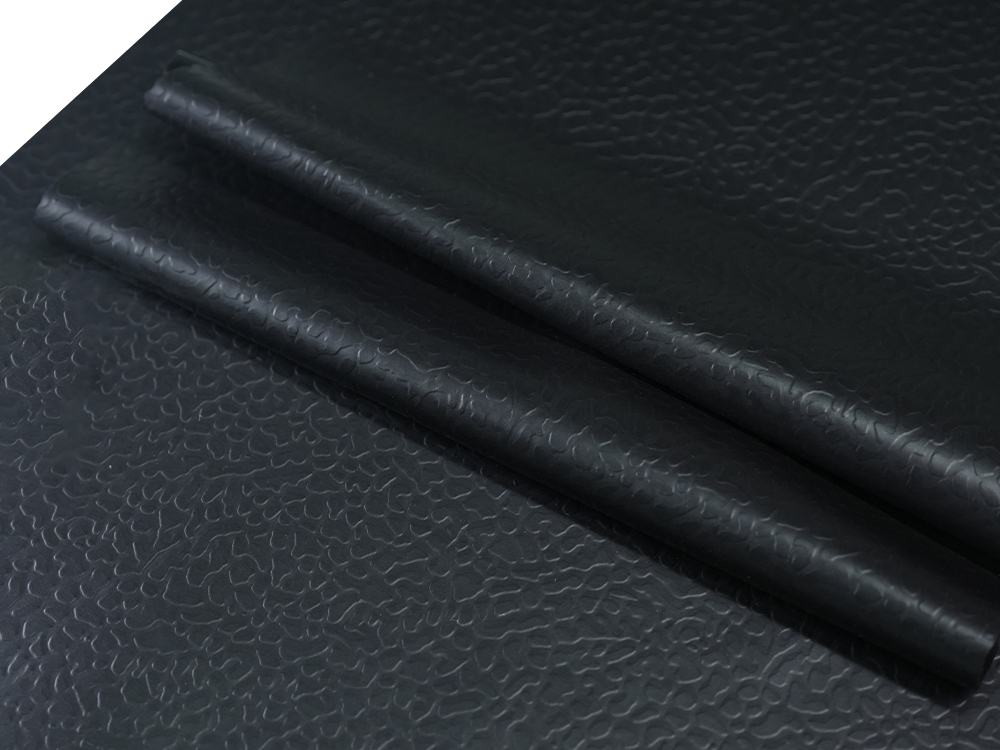
Artificial leather release paper serves as the critical carrier medium that transfers surface patterns and textures to synthetic leather substrates during the coating process. This specialized paper substrate receives embossed patterns through precision calendering operations, then releases these textures onto polyurethane or polyvinyl chloride coatings without adhesion failure.
The release functionality depends on controlled surface energy properties that allow clean separation after the coating cures. Manufacturers typically achieve release values between 15 to 35 grams per 25 millimeters width, ensuring reliable demolding while preventing pattern distortion during the artificial leather release process.
Material Composition and Specifications
High-quality artificial leather release paper utilizes supercalendered kraft paper bases ranging from 80 to 150 grams per square meter. The base paper undergoes specialized coating treatments including silicone release layers, barrier coatings, and occasionally polymeric films that enhance dimensional stability during thermal processing.
Critical Physical Properties
- Tensile strength exceeding 5 kilonewtons per meter in machine direction
- Heat resistance up to 200 degrees Celsius for PVC processing and 180 degrees Celsius for PU systems
- Moisture content maintained between 4% and 7% to prevent curling
- Surface roughness controlled within 0.8 to 1.5 micrometers Ra for fine pattern reproduction
Manufacturing Process and Quality Control
The production of artificial leather release paper involves multi-stage processing to achieve consistent release characteristics. Base paper manufacturing employs long-fiber kraft pulp to maximize strength properties, followed by surface sizing using starch or synthetic polymers that create a smooth foundation for subsequent coating operations.
Release coating application utilizes gravure or slot-die coating methods to deposit silicone formulations at 0.5 to 2.0 grams per square meter. Curing ovens maintain temperatures between 120 and 150 degrees Celsius for 30 to 60 seconds to achieve proper crosslinking without thermal degradation of the paper substrate.
| Grade Classification | Basis Weight (g/m²) | Release Force (g/25mm) | Application Type |
|---|---|---|---|
| Standard Grade | 80-100 | 25-35 | Dry Process PU |
| Premium Grade | 100-120 | 15-25 | Wet Process PU |
| Industrial Grade | 120-150 | 30-40 | PVC Calendering |
Pattern Replication Technology
The artificial leather release paper functions as the primary tooling medium that defines surface aesthetics in finished synthetic leather products. Embossing calenders apply pressures ranging from 50 to 200 newtons per linear centimeter to imprint leather grain, geometric patterns, or custom textures onto the release paper surface.
Pattern durability on artificial leather release paper extends to 8 to 12 production cycles under optimal conditions before texture degradation occurs. Advanced chrome-plated embossing rolls with laser-engraved patterns achieve resolution capabilities of 50 lines per centimeter, enabling reproduction of natural leather pore structures and subtle surface variations.
Integration with Coating Production Lines
Artificial leather release paper operates within continuous coating production lines that synchronize unwinding, coating application, lamination, and rewinding operations. Line speeds typically range from 15 to 50 meters per minute depending on coating thickness and curing requirements. The release paper travels through the system in face-to-face contact with the wet coating layer, maintaining tension control within ±5% to prevent pattern distortion.
System Compatibility Requirements
- Web guiding systems maintaining lateral position accuracy within 1 millimeter
- Tension control zones isolating coating station dynamics from unwinding and rewinding operations
- Temperature-resistant idler rolls with hard chrome plating to prevent surface contamination
- Automatic splicing capability to enable continuous production during roll changes
Economic Considerations and Sustainability
Artificial leather release paper represents a significant consumable cost in synthetic leather manufacturing, accounting for 8% to 15% of total material expenses. Recycling programs recover 60% to 75% of used release paper for repulping and base paper production, reducing landfill disposal and raw material consumption.
Emerging developments focus on biodegradable release coatings and paper substrates derived from sustainable forestry certifications. Water-based silicone emulsions replace solvent-based systems to eliminate volatile organic compound emissions during the coating phase of artificial leather release paper manufacturing.

Feel free to contact us now!
We provide customers with sustainable and environmentally friendly release paper products and services.


-

-
 INDIA DISTRIBUTOR:
 -
 ITALY DISTRIBUTOR:
 -
 PAKISTAN DISTRIBUTOR:
Copyright © Anhui Honghuan New Material Technology Co., Ltd. Rights Reserved.
Custom Casting Release Paper Factory