

 English
 中文简体
中文简体
TURKEY DISTRIBUTOR:
Submit feedback

Leather Release Paper Manufacturing and Application Guide
Content
- 1 Conclusion: Leather Release Paper Controls Texture and Surface Quality
- 2 What Is Leather Release Paper and How It Works
- 3 Structure and Material Composition
- 4 Types of Leather Release Paper
- 5 Production Process of Leather Release Paper
- 6 Key Performance Indicators for Selection
- 7 Application Scenarios in Synthetic Leather Production
- 8 How to Match Release Paper with Production Requirements
Conclusion: Leather Release Paper Controls Texture and Surface Quality
Leather release paper is a critical material in synthetic leather and coating production, directly determining surface texture, gloss level, and defect rate. By transferring predefined patterns and controlling coating release behavior, it enables consistent surface finishing across large-scale production. In industrial applications, high-quality release paper can improve product consistency by over 40 percent and reduce surface defects such as bubbles or uneven textures by 20 percent to 30 percent.
Selecting the appropriate release paper specification based on coating type, embossing requirement, and processing conditions is essential for achieving stable production results.
What Is Leather Release Paper and How It Works
Leather release paper is a specially treated base paper coated with release agents and surface textures. It is primarily used in the production of synthetic leather, PU leather, and PVC leather.
During the coating process, liquid polymer layers are applied onto the release paper surface. After curing, the coated layer is peeled off, transferring the texture and gloss from the paper to the final product surface.
- Provides controlled release performance during peeling
- Transfers precise surface textures such as matte, glossy, or embossed patterns
- Supports repeated use in continuous production lines
Structure and Material Composition
The performance of leather release paper depends on its multilayer structure, each layer contributing to durability and surface accuracy.
| Layer | Function | Key Feature |
|---|---|---|
| Base Paper | Structural support | High strength and dimensional stability |
| Resin Coating | Surface smoothing | Improves coating uniformity |
| Release Layer | Peeling control | Stable release force |
| Embossed Surface | Texture transfer | High precision pattern replication |
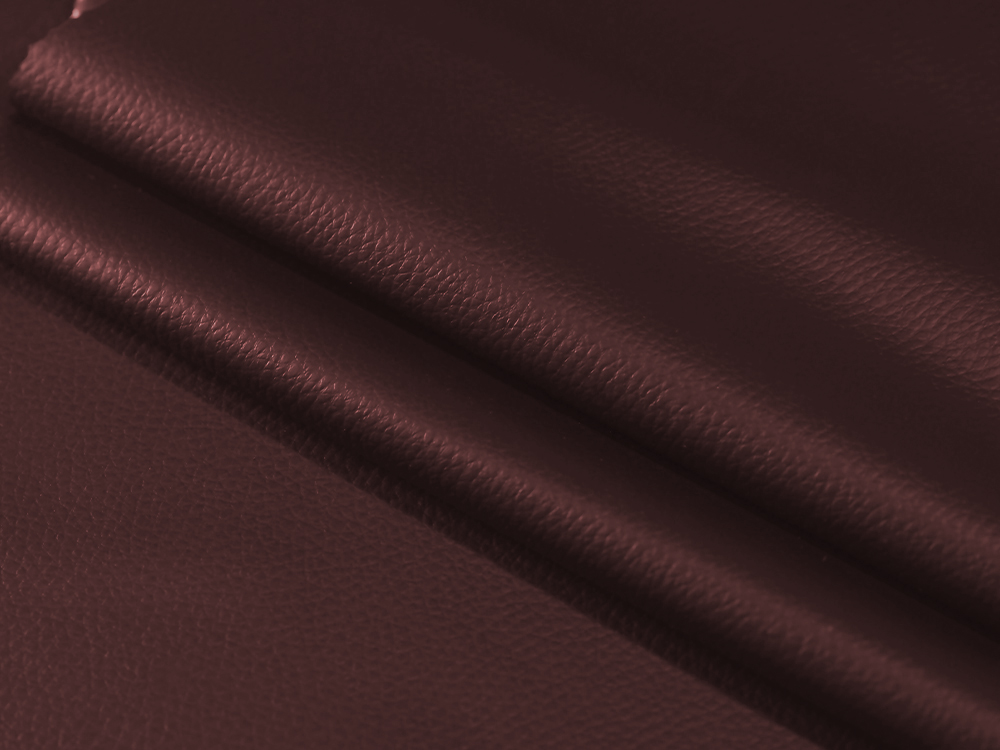
Types of Leather Release Paper
Different production requirements lead to various types of release paper, each optimized for specific coating systems and surface finishes.
Gloss Level Classification
- High gloss release paper for smooth reflective finishes
- Matte release paper for low reflection surfaces
- Semi gloss release paper for balanced appearance
Texture Classification
- Smooth surface for uniform coatings
- Embossed patterns for leather grain effects
- Customized textures for specific design requirements
Application-Based Classification
- PU leather release paper
- PVC leather release paper
- Microfiber leather production release paper
Production Process of Leather Release Paper
The manufacturing process involves precise coating and surface treatment steps to ensure consistent performance during industrial use.
- Base paper preparation and strength enhancement
- Resin coating to create a smooth and stable surface
- Application of release agent layer
- Embossing process to form surface texture
- Drying and curing under controlled temperature
- Quality inspection including release force and surface accuracy testing
High-end production lines maintain thickness tolerance within ±2 percent and ensure consistent release force across large batches.
Key Performance Indicators for Selection
Evaluating leather release paper requires focusing on measurable performance parameters that impact production stability.
- Release force stability ensures smooth separation without tearing
- Surface roughness accuracy determines final texture quality
- Heat resistance supports curing temperatures above 120 degrees
- Durability allows multiple reuse cycles in continuous production
In industrial environments, high-quality release paper can be reused 5 to 10 cycles depending on coating type and process conditions.
Application Scenarios in Synthetic Leather Production
Leather release paper is widely applied in industries where controlled surface finishing is required.
- Synthetic leather for furniture upholstery
- Automotive interior materials such as सीट covers and panels
- Footwear and bag manufacturing
- Decorative materials and coated textiles
In automotive applications, consistent surface texture and gloss control are essential for maintaining uniform interior appearance across production batches.
How to Match Release Paper with Production Requirements
Proper matching between release paper and coating process ensures stable production and reduces defects.
- Select texture based on final product design requirements
- Match release force with coating adhesion characteristics
- Ensure compatibility with curing temperature and process speed
- Evaluate reuse cycles to optimize cost efficiency
For high-speed production lines, stable release performance is essential to prevent defects such as tearing, sticking, or uneven surface transfer.

Feel free to contact us now!
We provide customers with sustainable and environmentally friendly release paper products and services.


-

-
 INDIA DISTRIBUTOR:
 -
 ITALY DISTRIBUTOR:
 -
 PAKISTAN DISTRIBUTOR:
Copyright © Anhui Honghuan New Material Technology Co., Ltd. Rights Reserved.
Custom Casting Release Paper Factory