

 English
 中文简体
中文简体
TURKEY DISTRIBUTOR:
Submit feedback

Release Paper Guide: Ultra Matt to Semi-Gloss Explained
Release papers are silicone-coated carrier substrates used to protect adhesive surfaces and impart specific textures or finishes to materials cast against them — and the gloss level of the release paper directly determines the surface appearance of the final product. Ultra matt release paper produces the flattest, most light-absorbing finish; matt release paper offers a clean low-sheen surface; semi-matt release paper delivers a subtle mid-range reflectance; and semi-gloss release paper provides a noticeable sheen without reaching full mirror-gloss levels. Choosing the correct grade is not merely an aesthetic decision — it affects haptic perception, adhesive release force, and end-product quality in synthetic leather, labels, graphic films, and composites manufacturing.
Content
- 1 What Release Paper Is and How Gloss Level Is Defined
- 2 Ultra Matt Release Paper: Maximum Flatness and Tactile Softness
- 3 Matt Release Paper: The Workhorse Finish Grade
- 4 Semi-Matt Release Paper: Balanced Finish for Versatile Applications
- 5 Semi-Gloss Release Paper: Visible Sheen with Practical Versatility
- 6 Side-by-Side Comparison of All Four Release Paper Grades
- 7 How Release Force Relates to Gloss Grade
- 8 Selecting the Right Release Paper Grade: Decision Criteria
What Release Paper Is and How Gloss Level Is Defined
Release paper is a base paper or film substrate coated on one or both sides with a silicone release agent. The silicone layer prevents adhesives, polyurethane (PU), PVC, or resin systems cast onto it from permanently bonding — allowing clean separation once the cast material has cured or dried. Beyond its functional release role, the topography of the silicone-coated surface is transferred directly to the material cast against it, making the release paper a texture and finish tool as much as a process aid.
Gloss level is measured using a gloss meter at a standard angle — typically 60° geometry per ISO 2813 or ASTM D523 — and expressed in Gloss Units (GU). As a practical reference scale:
- Ultra matt: below 2 GU at 60°
- Matt: approximately 2–10 GU at 60°
- Semi-matt: approximately 10–35 GU at 60°
- Semi-gloss: approximately 35–70 GU at 60°
- High gloss / mirror: above 70 GU at 60°
Because the release paper surface is reverse-transferred to the cast material, a matt release paper produces a matt finish on the product, and a semi-gloss release paper produces a semi-gloss product surface. This inverse replication principle means release paper selection is the primary process control for surface finish specification in cast film and synthetic leather manufacturing.
Ultra Matt Release Paper: Maximum Flatness and Tactile Softness
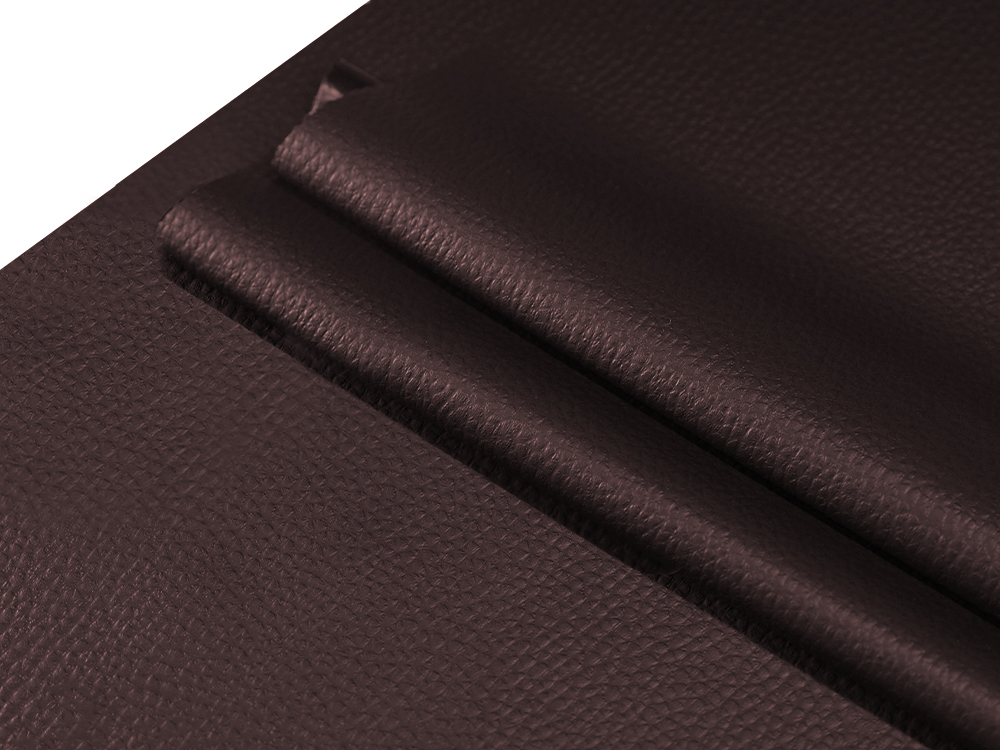
Ultra matt release paper is engineered to produce the lowest possible surface reflectance on the finished product — typically below 2 GU measured at 60°. Achieving this requires a carefully controlled silicone coating applied over a base paper with intentional microscopic surface roughness, creating a densely textured micro-topography that scatters incident light in all directions rather than reflecting it specularly.
Surface Structure and Manufacturing
Ultra matt surfaces are typically achieved by incorporating fine mineral fillers (silica, kaolin, or calcium carbonate) into the coating formulation, or by embossing the release paper with a very fine, diffuse texture pattern before silicone application. The resulting surface has a Ra (average roughness) value often in the range of 3.0µm to 8.0µm, compared to 0.1µm to 0.5µm for a high-gloss release liner. This roughness is what breaks up specular reflection and transfers a flat, velvety appearance to the cast material.
Primary Applications
- Premium automotive interiors: Dashboard covers, door panel surfaces, and steering wheel wraps in PU or PVC where ultra-low gloss is specified to minimize distracting reflections for the driver. Many OEM automotive interior specifications require gloss values below 1.5 GU, which only ultra matt release papers can consistently deliver.
- Luxury fashion and accessories: Handbags, footwear uppers, and small leather goods in synthetic materials where a matte, premium tactile experience is a brand requirement.
- Furniture upholstery: Sofa and chair coverings where flat finishes are preferred for contemporary interior design aesthetics.
- Protective and decorative films: Self-adhesive films applied to electronics or appliance surfaces where anti-fingerprint and anti-glare properties are valued.
Practical Considerations
The high surface roughness of ultra matt release papers means that PU or PVC compounds must have sufficient flow viscosity to fully wet and replicate the fine texture detail. Very low-viscosity coatings may pool unevenly, while very high-viscosity systems may not fully penetrate the texture valleys, resulting in inconsistent gloss uniformity across the web. Process engineers typically run rheology trials when transitioning to ultra matt grades.
Matt Release Paper: The Workhorse Finish Grade
Matt release paper is the most broadly used finish grade in synthetic leather and pressure-sensitive label manufacturing. With a surface gloss typically in the 2–10 GU range at 60°, it produces a clean, non-reflective finish that reads as natural and understated — resembling the surface of quality genuine leather or premium paper.
Construction and Coating
Matt release papers are constructed on either glassine, super-calendered kraft (SCK), polyethylene-coated kraft (PE kraft), or clay-coated paper bases depending on the application. The silicone coating weight is typically 0.8 g/m² to 1.5 g/m² on the release side, applied by solvent, solventless, or emulsion silicone systems and cured thermally or by UV. The base paper's inherent surface smoothness and the silicone formulation together determine the final gloss level.
Key Application Areas
- Pressure-sensitive label liners: The single largest end market for matt release paper. The flat, low-gloss liner surface allows clear printing of variable data (barcodes, lot numbers) on the label face without visual interference from liner show-through.
- Synthetic leather for apparel and accessories: Jackets, belts, wallets, and shoes where a natural leather appearance is the target finish.
- Graphic arts and protective overlaminates: Matt lamination films used over printed materials to reduce glare and improve readability.
- Medical and hygiene product liners: Wound dressings, surgical drapes, and transdermal patch liners where a clean, predictable release at low peel force is required.
Semi-Matt Release Paper: Balanced Finish for Versatile Applications
Semi-matt release paper occupies the middle ground of the finish spectrum — producing surfaces in the 10–35 GU range at 60° that have a subtle luminosity without appearing shiny. This balanced finish is particularly valued where the product must look both refined and durable, or where the application alternates between interior and exterior visibility.
How Semi-Matt Is Achieved
Semi-matt release papers are produced by carefully balancing the smoothness of the base substrate with controlled filler levels in the silicone or pre-coat layer. Unlike ultra matt papers where roughness is maximized, semi-matt papers use a smoother base (often super-calendered or lightly clay-coated) and a moderate silica loading in the coating to achieve a Ra surface roughness typically between 0.8µm and 2.5µm. This range is smooth enough to produce an even, slightly luminous surface but rough enough to avoid specular highlights.
Where Semi-Matt Release Paper Is Specified
- Sports goods and footwear: Athletic shoe uppers and sports bag materials where a subtle sheen signals performance material character without looking decorative.
- Office furniture and wall panels: Decorative PVC laminates for workstation surfaces and partition panels where a low-sheen finish reduces visual fatigue under office lighting.
- Flooring and wall coverings: Vinyl floor tiles and decorative wall films where a slight sheen aids in cleanability without appearing slippery or overly reflective.
- Composite prepreg materials: In fibre-reinforced polymer (FRP) manufacturing, semi-matt release films are used to produce composite panels with a controlled, uniform surface finish for further painting or bonding.
Semi-Gloss Release Paper: Visible Sheen with Practical Versatility
Semi-gloss release paper produces a noticeably reflective surface — typically 35–70 GU at 60° — that gives finished products a polished, premium appearance while stopping short of the full-mirror finish of high-gloss grades. The semi-gloss finish is widely associated with quality across product categories ranging from printed labels to fashion accessories.
Surface Structure and Replication Precision
Achieving consistent semi-gloss surface transfer requires a very smooth base substrate — typically a highly calendered or film-laminated paper — with a silicone coating applied at tightly controlled coat weight and viscosity. Surface roughness is in the range of Ra 0.2µm to 0.8µm. At this level of smoothness, minor variations in silicone coat weight or curing conditions have a visible impact on gloss uniformity, so semi-gloss and gloss release paper manufacturing demands tighter process control than matt grades.
Primary Uses of Semi-Gloss Release Paper
- Premium label and packaging liners: Food packaging labels, cosmetic product stickers, and pharmaceutical labeling where the label face stock benefits from high-quality print contrast against a smooth, clean liner surface.
- High-end synthetic leather for fashion: Handbag exteriors, shoe toe caps, and belt surfaces in PU where a polished, luxurious appearance is the brand signature.
- Decorative transfer films: Hot stamping foils and decorative transfer applications in consumer electronics, cosmetic packaging, and stationery where a semi-gloss background enhances printed metallic or color graphics.
- Architectural and interior decorative laminates: Cupboard door foils and decorative furniture wrapping films where a mid-gloss finish is specified for a contemporary kitchen or bathroom aesthetic.
Side-by-Side Comparison of All Four Release Paper Grades
| Property | Ultra Matt | Matt | Semi-Matt | Semi-Gloss |
|---|---|---|---|---|
| Gloss Level (60°) | < 2 GU | 2–10 GU | 10–35 GU | 35–70 GU |
| Surface Roughness (Ra) | 3.0–8.0 µm | 1.5–3.5 µm | 0.8–2.5 µm | 0.2–0.8 µm |
| Visual Effect on Product | Flat, velvety, anti-glare | Clean, natural, low-sheen | Subtle luminosity | Noticeable sheen, polished |
| Tactile Feel | Soft, dry, premium | Smooth, natural | Smooth, slightly slick | Slick, glossy hand |
| Process Control Demand | Moderate | Moderate | Moderate–High | High |
| Typical Industries | Automotive, luxury fashion | Labels, apparel, medical | Sports goods, flooring | Fashion, packaging, décor |
How Release Force Relates to Gloss Grade
Beyond aesthetics, gloss grade has a measurable effect on release force — the peel force required to separate the cured or dried material from the release paper. This relationship arises from the contact area between the adhesive or cast film and the release surface: a smoother (higher gloss) surface has a greater contact area per unit of apparent surface, increasing molecular adhesion and therefore requiring slightly higher peel force.
In practical terms, ultra matt release papers typically exhibit 10–25% lower release force than semi-gloss papers of equivalent silicone chemistry at the same adhesive system, because the rough surface reduces true contact area. For high-speed label dispensing or automated peel-and-apply processes, this difference in release force is a meaningful process parameter — lower release force reduces the risk of label distortion or adhesive splitting during dispensing.
Selecting the Right Release Paper Grade: Decision Criteria
When specifying a release paper grade for a new application, evaluate the following factors:
- Target gloss specification of the finished product: Obtain the GU value required by the product design specification or customer standard, then select the release paper grade whose transferred gloss matches — remembering that the paper's own gloss is the inverse of the product gloss it produces.
- Coating system viscosity and processing temperature: Very rough ultra matt papers require lower-viscosity coatings to achieve full texture replication. Confirm compatibility with your PU, PVC, or adhesive coating line parameters.
- Number of passes or reuse cycles: Matt and ultra matt release papers generally tolerate more reuse cycles than semi-gloss grades because surface damage to a rough texture is less visible. Semi-gloss papers show scratches and wear marks more readily.
- Release force requirements of the downstream process: For automated dispensing or fast-peel applications, specify a paper with the lowest acceptable release force — typically an ultra matt or matt grade with a premium low-release silicone system.
- Environmental and regulatory requirements: Confirm whether solvent-free silicone or food-contact compliant grades are required for your end market, particularly for medical, food packaging, or toy applications.

Feel free to contact us now!
We provide customers with sustainable and environmentally friendly release paper products and services.


-

-
 INDIA DISTRIBUTOR:
 -
 ITALY DISTRIBUTOR:
 -
 PAKISTAN DISTRIBUTOR:
Copyright © Anhui Honghuan New Material Technology Co., Ltd. Rights Reserved.
Custom Casting Release Paper Factory