

 English
 中文简体
中文简体
TURKEY DISTRIBUTOR:
Submit feedback

Car, Luggage, Floor & Shoe Sofa Leather: Complete Guide
Different leather applications demand fundamentally different material properties—what makes an excellent car leather will perform poorly as floor leather, and shoe leather construction differs significantly from sofa upholstery. Car leather prioritizes UV resistance, abrasion durability, and breathability across wide temperature ranges. Luggage leather demands tensile strength, scratch resistance, and structural rigidity. Floor leather must withstand compressive load, slip resistance, and repeated impact. Shoe and sofa leather each balance flexibility, surface finish, and comfort in application-specific ways. Understanding these distinctions—grounded in tanning method, hide selection, finishing chemistry, and thickness specification—is the practical foundation for sourcing, specifying, or purchasing leather for any of these applications.
Content
- 1 How Leather Type and Tanning Method Determine Application Suitability
- 2 Car Leather: Durability, UV Resistance, and Thermal Stability
- 3 Luggage Leather: Strength, Structure, and Surface Resilience
- 4 Floor Leather: Load Bearing, Slip Resistance, and Dimensional Stability
- 5 Shoe Leather: Flexibility, Breathability, and Construction Compatibility
- 6 Sofa Leather: Softness, Durability, and Long-Term Appearance Retention
- 7 Cross-Application Comparison: Key Properties by Use Category
- 8 Care and Maintenance Across Leather Application Types
How Leather Type and Tanning Method Determine Application Suitability
Before examining each application category, it is essential to understand that leather performance is determined first by the tanning process—the chemical method used to convert raw hide into stable leather—and second by the finishing treatments applied to the tanned substrate. These two factors determine almost all of the properties that differentiate car leather from floor leather, or luggage leather from sofa leather.
Chrome Tanning vs Vegetable Tanning
Chrome tanning accounts for approximately 85–90% of global leather production. It produces soft, supple, color-stable leather that is resistant to heat and water absorption—properties that make it the default choice for car interiors, upholstered furniture, and most shoe uppers. Chrome-tanned leather typically has a uniform stretch, recovers well from compression, and takes dye and surface finishes evenly.
Vegetable tanning uses plant-derived tannins (from oak bark, chestnut, mimosa, or quebracho) and produces firmer, denser leather with a characteristic earthy scent. It develops a patina with use and age, making it highly valued for luggage, belts, and shoe soles. Vegetable-tanned leather is less flexible than chrome-tanned but more structurally rigid—an advantage in applications where shape retention matters more than drape.
Leather Grades and Their Practical Meaning
- Full-grain leather: The outermost layer of the hide with the natural grain surface intact. The most durable grade—the densely packed fiber structure at the grain layer provides the highest tensile strength and the best resistance to abrasion, moisture, and aging. Used in premium car interiors, quality luggage, and high-end shoe uppers.
- Top-grain leather: The grain surface is lightly sanded to remove imperfections, then an embossed or printed grain pattern is applied. Thinner and more uniform than full-grain, with reduced durability but a more consistent appearance. The standard for mid-range automotive seating and most commercial sofa upholstery.
- Split leather: The lower fibrous layer separated from the grain. Applied with a polyurethane or PVC coating to simulate a grain surface. Used in budget automotive applications, entry-level luggage, and shoe linings. Significantly lower durability than grain leathers.
- Nubuck and suede: Nubuck is buffed full-grain leather; suede is the inner split surface buffed to a nap. Both are used in shoe uppers and occasional furniture applications where a soft texture is prioritized over easy-clean durability.
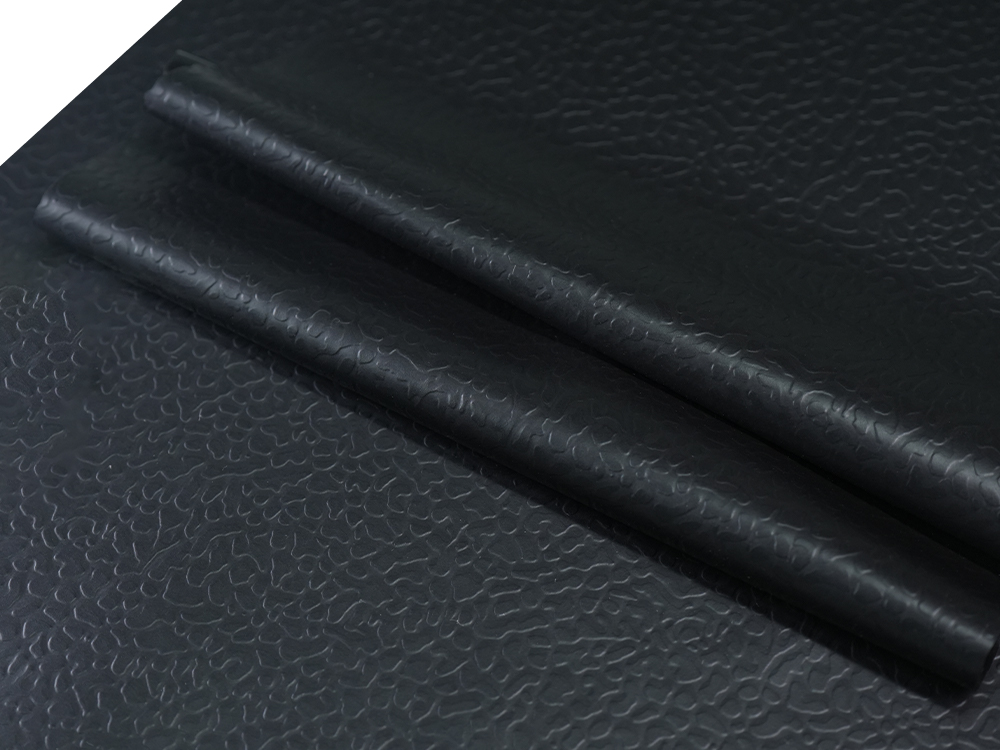
Car Leather: Durability, UV Resistance, and Thermal Stability
Automotive leather operates in one of the most demanding environments of any interior textile. A vehicle interior in a hot climate can reach 80–90°C on seat surfaces exposed to direct sun, then cool to near ambient temperature overnight—a daily thermal cycle that stresses every bonded, coated, and stitched joint in the leather assembly. UV exposure through glass causes photodegradation of both the dye system and the surface finish. Occupant movement creates continuous abrasion, particularly on seat squabs and bolsters.
Technical Requirements for Automotive Leather
Automotive OEM specifications for leather typically require performance across a comprehensive test battery. Common specification thresholds include:
- Rub fastness (dry): Minimum Grade 4 on a 5-point scale after 20,000 Martindale cycles—equivalent to years of entry and exit abrasion from clothing contact
- Light fastness: Minimum Grade 4 after 150–200 hours of xenon arc exposure (simulating approximately 3–5 years of UV exposure through automotive glass)
- Heat aging: No cracking, color change greater than Grade 3, or tackiness after 168 hours at 90°C
- Hydrolysis resistance: No delamination or surface breakdown after 7 weeks at 70°C and 95% relative humidity—critical for humid climate markets
- Fogging value: VOC and condensate emissions must meet OEM-specific limits (typically DIN 75201 Method B fogging value below 1.0 mg) to prevent windshield fogging from interior off-gassing
Thickness and Hide Selection for Automotive Use
Automotive leather is typically specified at 0.9–1.2 mm thickness for seat facings, slightly thinner (0.7–0.9 mm) for instrument panel applications where tight radius wrapping is required. Bovine hides from cattle aged 18–30 months are preferred for their balance of fiber density and consistent thickness. European hides are generally preferred in premium automotive applications for their lower brand mark and parasite damage rates compared to hides from tropical regions.
Perforated vs Non-Perforated Car Leather
Perforated car leather—with laser or punch-cut holes in regular patterns—is used in combination with ventilated seat systems to improve airflow through the seating surface. The perforation pattern and hole diameter (typically 0.8–2.0 mm) must be specified to balance airflow, structural integrity, and aesthetics. Non-perforated leather is used in heated-only seat systems, where ventilation is not required and the continuous surface provides slightly greater rub durability.
Luggage Leather: Strength, Structure, and Surface Resilience
Luggage leather must withstand a combination of mechanical stresses that no other leather application replicates: heavy load-bearing at hardware attachment points, repeated flexing at hinges and gussets, contact abrasion from handling and transport surfaces, and exposure to rain, airport conveyor systems, and varying humidity levels.
Why Vegetable-Tanned Leather Dominates Premium Luggage
The structural rigidity of vegetable-tanned leather is the primary reason it dominates the premium luggage market. At typical luggage leather thicknesses of 2.0–4.0 mm, vegetable-tanned bovine leather provides enough stiffness to hold shape without internal framing—reducing weight while maintaining form. It also accepts burnishing, waxing, and edge finishing treatments that chrome-tanned leather does not, enabling the characteristic polished edges seen on quality leather bags and briefcases.
The patina development of vegetable-tanned leather is a specific performance attribute for the luggage market. Natural tan color darkens and deepens with use, oil absorption, and UV exposure—a process that many consumers actively value as evidence of authentic material and accumulated character. This is impossible to replicate in chrome-tanned or coated split leather, which ages instead through surface delamination and color fading.
Hardware Attachment and Stress Point Design
Quality luggage leather must resist tearing at hardware attachment points—rivets, D-rings, buckles, and stitched loops—where concentrated stress occurs during lifting and carrying. Tear strength (tongue tear method) of at least 40 N/mm is typically specified for luggage leather at attachment zones. Reinforcement techniques including leather doubling, welt construction, and bar-tack stitching are used at these points regardless of leather grade.
Water Resistance for Luggage Applications
While no untreated natural leather is waterproof, luggage leather is typically finished with wax impregnation, water-repellent surface treatments, or silicone-based topcoats that provide meaningful water resistance for brief rain exposure. A well-maintained full-grain vegetable-tanned leather bag can repel light rain for 15–30 minutes without moisture penetration; untreated splits or coated leathers fail much faster at seams and surface imperfections.
Floor Leather: Load Bearing, Slip Resistance, and Dimensional Stability
Leather flooring—used in residential, hospitality, and boutique retail settings—places demands on the material that are entirely different from all other leather applications. The primary stresses are compressive load from foot traffic and furniture weight, abrasion from shoe soles and grit particles tracked in from outside, and dimensional movement from changes in ambient humidity.
Thickness and Density Requirements for Floor Use
Floor leather tiles and planks are typically produced from heavily vegetable-tanned bovine leather at 4–8 mm thickness—significantly thicker than any other leather application category. This thickness provides the compressive resistance needed to prevent permanent deformation under furniture leg loads and to resist the cutting action of grit particles ground against the surface by foot traffic.
Some manufacturers use compressed leather board—a product made by bonding layers of leather fiber under high pressure—for floor applications. This material achieves higher density and dimensional stability than solid leather at comparable thickness but lacks the grain surface aesthetics of full-hide products.
Surface Finishing for Floor Leather
Floor leather must balance slip resistance with cleanability—two properties that work against each other. A heavily textured surface provides grip but traps dirt; a smooth waxed surface is easy to clean but can be slippery when wet. Production floor leathers address this with:
- Multi-layer wax and oil impregnation: Saturates the fiber structure to resist moisture ingress and staining while maintaining a slight surface texture for grip. Regular reapplication (typically once or twice per year in residential use) maintains this protection.
- Polyurethane topcoat: Applied in commercial-use floor leathers to provide a more durable, easily cleaned surface. Reduces the natural leather character but significantly extends maintenance intervals.
- Embossed anti-slip patterns: Geometric or pebble-grain embossing increases surface micro-texture and coefficient of friction without compromising cleanability.
Humidity and Dimensional Movement
Leather is hygroscopic—it absorbs and releases moisture as ambient humidity changes, expanding and contracting in response. This dimensional movement must be accommodated in floor leather installation with expansion gaps of 8–12 mm at all perimeter edges, similar to hardwood flooring. Subfloor moisture barriers are essential; direct adhesive bonding to concrete slabs without a moisture barrier leads to cupping, buckling, and adhesive failure within 12–18 months in most climates.
Shoe Leather: Flexibility, Breathability, and Construction Compatibility
Footwear leather encompasses more distinct sub-categories than any other leather application—upper leather, insole leather, outsole leather, lining leather, and welt leather all have different and sometimes contradictory property requirements within a single pair of shoes.
Upper Leather: Flexibility and Moisture Management
Shoe upper leather must flex repeatedly—up to 10,000–20,000 flexion cycles per year in daily wear—without cracking at the vamp flex point. Chrome-tanned calf or bovine leather is the standard for quality dress shoe uppers, providing the combination of fine grain, tensile strength, and flex resistance required. Typical upper leather thickness is 1.0–1.6 mm for dress shoes and 1.6–2.2 mm for work boots.
Breathability—the ability to transmit moisture vapor from the foot to the outside—is a critical comfort property. Full-grain leather transmits approximately 2–3 mg/cm²/hour of water vapor, significantly more than synthetic alternatives, which is why leather footwear remains preferred for extended wear despite higher cost.
Outsole Leather: Density and Wear Resistance
Leather outsoles—used in quality dress shoes and traditional Goodyear-welted construction—are made from heavily vegetable-tanned bovine leather at 4–6 mm thickness, compressed to high density to resist abrasion against paving surfaces. The specific gravity of quality outsole leather approaches 0.9–1.0 g/cm³—nearly twice that of typical upper leather—reflecting the compressive tanning and pressing treatment applied during production.
Insole and Lining Leather
Insole leather must absorb foot perspiration, provide cushioning under repetitive compressive load, and maintain dimensional stability without curling or delaminating from adhesive bonding. Chrome-retanned or combination-tanned leathers at 2.0–3.5 mm are standard. Lining leather—the material covering the interior of the upper—is typically a thin, soft chrome-tanned split or grain leather at 0.5–0.8 mm, dyed in neutral colors and finished to resist abrasion from stocking contact.
Sofa Leather: Softness, Durability, and Long-Term Appearance Retention
Upholstery leather for sofas and seating furniture must balance softness and comfort with the durability to withstand years of daily occupant contact, cleaning, and UV exposure from room lighting and windows. The performance requirements are similar in category to automotive leather but with different priority weighting—comfort and aesthetics rank higher relative to thermal stability, and VOC emission requirements are less stringent than OEM automotive specifications.
Thickness and Softness Specification for Sofa Leather
Sofa upholstery leather is typically specified at 1.0–1.4 mm thickness—slightly thicker than automotive leather to provide adequate coverage over foam and spring suspension systems without excessive rigidity. Softness is measured by ball burst test or subjective panel assessment; premium sofa leather targets a ball burst value of 150–200 N, corresponding to a noticeably supple hand feel that drapes well over shaped upholstery forms.
Rub Fastness and Cleaning Resistance
The most common sofa leather failure mode is color transfer to light-colored clothing—particularly a problem with deeply dyed or aniline-finished leathers. Dry rub fastness of Grade 4 minimum after 5,000 Martindale cycles is a practical threshold for domestic sofa leather; contract or hospitality upholstery leather should meet Grade 4 after 20,000 cycles. Semi-aniline and pigmented finishes provide better rub fastness than pure aniline at the cost of a slightly less natural appearance.
Aniline vs Semi-Aniline vs Pigmented Sofa Leather
- Aniline leather: Dyed only with soluble dyes, no surface coating. The natural grain, pores, and markings of the hide are fully visible. The most natural-feeling and aesthetically luxurious option, but the least resistant to staining, fading, and rub transfer. Suitable for low-traffic display or occasional-use furniture only.
- Semi-aniline leather: A thin protective coating is applied over the aniline dye base, preserving most of the natural appearance while providing meaningful stain and rub resistance. The practical optimum for most residential sofa applications—combining acceptable durability with premium aesthetics.
- Pigmented (protected) leather: A pigment-containing polymer coating covers the leather surface, providing the highest stain resistance, color uniformity, and rub fastness of the three types. Natural grain variation is concealed. The standard choice for high-traffic residential use, contract furniture, and households with children or pets.
Cross-Application Comparison: Key Properties by Use Category
| Property | Car Leather | Luggage Leather | Floor Leather | Shoe Leather | Sofa Leather |
|---|---|---|---|---|---|
| Typical thickness (mm) | 0.9–1.2 | 2.0–4.0 | 4.0–8.0 | 0.5–6.0 (by component) | 1.0–1.4 |
| Primary tanning method | Chrome | Vegetable | Vegetable | Chrome / Vegetable | Chrome |
| UV resistance priority | Critical | Moderate | Low–Moderate | Low | Moderate |
| Flexibility requirement | High | Low–Moderate | Low | High (upper); Low (sole) | High |
| Abrasion resistance priority | Very High | High | Very High | Very High (sole) | High |
| Patina / aging character | Not desired | Valued | Valued | Variable by product | Variable by grade |
| Water resistance requirement | High (spill resistance) | High | High | High (outsole, upper) | Moderate (stain resist) |
Care and Maintenance Across Leather Application Types
Correct maintenance extends leather service life significantly in all application categories. The appropriate care routine differs by leather type and finish, and applying the wrong treatment can cause more damage than neglect.
| Application | Cleaning Method | Conditioning Treatment | Frequency | Avoid |
|---|---|---|---|---|
| Car leather | pH-neutral leather cleaner, soft cloth | Automotive leather conditioner (water-based) | Clean monthly; condition every 3–6 months | Solvent cleaners, silicone-based products |
| Luggage leather | Damp cloth; leather saddle soap for heavy soiling | Beeswax or neutral leather cream | Condition 2–4 times per year | Immersion in water; heat drying |
| Floor leather | Slightly damp mop; leather floor cleaner | Leather floor wax or oil | Damp mop weekly; wax 1–2 times per year | Wet mopping; steam cleaning; abrasive pads |
| Shoe leather | Soft brush to remove dirt; damp cloth | Shoe cream or wax polish by color | Polish after every 3–5 wears | Direct heat drying; petroleum-based products |
| Sofa leather | pH-neutral cleaner, soft cloth; blot spills immediately | Leather conditioner (avoid pigmented surfaces) | Clean monthly; condition every 6–12 months | Baby wipes, household cleaners, oils on pigmented finishes |
Feel free to contact us now!
We provide customers with sustainable and environmentally friendly release paper products and services.


-

-
 INDIA DISTRIBUTOR:
 -
 ITALY DISTRIBUTOR:
 -
 PAKISTAN DISTRIBUTOR:
Copyright © Anhui Honghuan New Material Technology Co., Ltd. Rights Reserved.
Custom Casting Release Paper Factory