

 English
 中文简体
中文简体
TURKEY DISTRIBUTOR:
Submit feedback

How to Prevent Static Buildup on High Temperature Release Paper During Heat Processing
At 10:45 on a dry shift, a roll of high temperature release paper on a PVC casting line began to cling to the cooling roller. The edge guide lost tracking, the winder created a bubble, and the operator found a small black mark where the web had flashed over a grounded frame. That sequence repeats whenever static buildup on high temperature release paper during heat processing is ignored. The practical question is not whether static will form, but how quickly you can give the charge somewhere safe to go.
The answer is a combination of environment, grounding, ionizing equipment, and web handling. For a manufacturer such as Anhui Honghuan New Material Technology Co., Ltd., which started developing high temperature release paper in 2019 and now supplies H-series papers for PVC and PVC/PU synthetic leather lines, static control is treated as part of the process, not as a fault of the paper.
A charged release paper surface is not a material defect. It is a signal that the surrounding air and machine path are not controlling the charge.
Content
- 1 Why Static Builds on High Temperature Release Paper During Heat Processing
- 2 Control Humidity to Reduce Static on High Temperature Release Paper
- 3 Ground Every Roller, Frame, and Idler in the Web Path
- 4 Add Static Neutralizers at High-Charge Points
- 5 Adjust Web Handling to Reduce Static on High Temperature Release Paper
- 6 Condition and Store High Temperature Release Paper Correctly
- 7 Choose a Release Paper with a Finish Suited to Stable Handling
- 8 Static Control on High Temperature Release Paper: FAQs
Why Static Builds on High Temperature Release Paper During Heat Processing
Static builds because the release paper and the machine rollers form a triboelectric pair, and the heat processing environment is normally dry enough to prevent charge decay.
Triboelectric charging is the transfer of electrons when two materials touch and separate. As the release paper unwinds, wraps a heated roller, and then separates to travel into the next nip, electrons move between the paper surface and the roller. Because release paper coatings and synthetic leather resins are insulative, the charge has no natural path to earth.
- Paper unwinding and rewinding creates repeated contact and separation.
- Steel, rubber, and ceramic rollers have different charge affinities.
- Heating zones and drying ovens lower local relative humidity by up to 15%.
- Release paper backings and release coatings resist electrical conduction.
At 45% relative humidity, a static charge on high temperature release paper can decay in seconds. At 30% RH, the same charge may remain for minutes.
Control Humidity to Reduce Static on High Temperature Release Paper
The first control is to keep the winding, unwind, and coating areas at 45-60% relative humidity.
Humidity is the cheapest static eliminator. Airborne moisture forms a thin conductive layer on the release paper surface, allowing charge to drain to grounded rollers. Most heat processing lines already have heating zones that lower RH, so the problem becomes visible near drying ovens and heated calenders.
Charge magnitude falls as relative humidity rises across the web path.
If the heat zone drops below 35% RH, start with humidifiers before buying another ionizer.
Ground Every Roller, Frame, and Idler in the Web Path
Grounding provides a controlled path for the charge to leave the web before it can cause trouble.
A metallic roller with high resistance to earth can still be saturated with charge. Measure every idler, guide roller, cooling can, and unwind shaft; resistance to earth should be below 10 ohms for effective static control.
- Ground the machine frame with braided copper straps.
- Use conductive or carbon-loaded rubber rollers on the unwind and rewinder.
- Fit static tinsel with a copper wire connected to earth so it lightly contacts the web edge.
- Clean rollers with a solvent instead of a dry cloth to avoid tribocharging.
Rule: every metal surface that touches the release paper should read near zero ohms to a verified earth point.
Add Static Neutralizers at High-Charge Points
Passive and active neutralizers remove the charge that grounding cannot drain.
Grounding works only while the web is in contact with a grounded element. When the web leaves that element, the remaining charge stays on the surface. Neutralizers put ions into the air to cancel the charge on both sides of the release paper.
| Option | Mechanism | Best use |
| Static tinsel | Drains charge through fine copper fibers | Low-speed unwind, short lines |
| Ionizing bar | Generates positive and negative ions in air | High-speed coating lines |
| Ionizing air knife | Directs ionized air across the full web width | Large webs and dust-sensitive areas |
Passive tools suit low web speeds and short runs.
Active ionizers are needed for high-speed continuous heat processing.
Adjust Web Handling to Reduce Static on High Temperature Release Paper
Lower web speed, lower tension, and fewer contact surfaces reduce the amount of charge generated per second.
Every separation of the release paper from a roller generates charge. Sharp angles and high nip pressures increase contact area and make the separation charge larger.
- Reduce line speed by 5-10% if static spikes appear on a specific roll.
- Reduce unwind and rewind tension to the minimum allowed by the release paper grade.
- Add a spreader roller or small-angle roll to control the web path without increasing pressure.
- Change rubber roller hardness if the current roller produces visible discharge.
Low speedFewer contact and separation cycles, lower peak charge
High tensionMore mechanical contact and faster charge accumulation
Condition and Store High Temperature Release Paper Correctly
Condition the release paper in the production environment for at least 24 hours before loading it on the machine.
Cold or dry release paper absorbs moisture slowly. Remove the outer packaging, stand the roll on its end, and let it equilibrate with the line humidity. If rolls are brought directly from a cold warehouse, condensation and static become worse together.
- Store rolls in low-lint plastic wrap, off the floor.
- Keep the storage area at 20 to 25 Celsius and 50-60% RH.
- Use first-in, first-out stock rotation.
- Do not store release paper near high-voltage cables or transformers.
A roll conditioned for 24 hours will carry far less charge than a roll that is pulled off a cold truck and run immediately.
Choose a Release Paper with a Finish Suited to Stable Handling
Release paper construction and surface finish affect how the web contacts rollers, and therefore how much static it can generate.
Anhui Honghuan New Material Technology Co., Ltd. structures its H-series high temperature release paper in five texture families: gemstone, large lychee, small lychee, cloth, and plain. Each family comes in four gloss levels, from ultra-matt to semibright. For PVC and PVC/PU lines, the texture choice changes the effective contact area and may change roller cleaning frequency, but the same static controls still apply. Three representative grades from the H series are listed below.
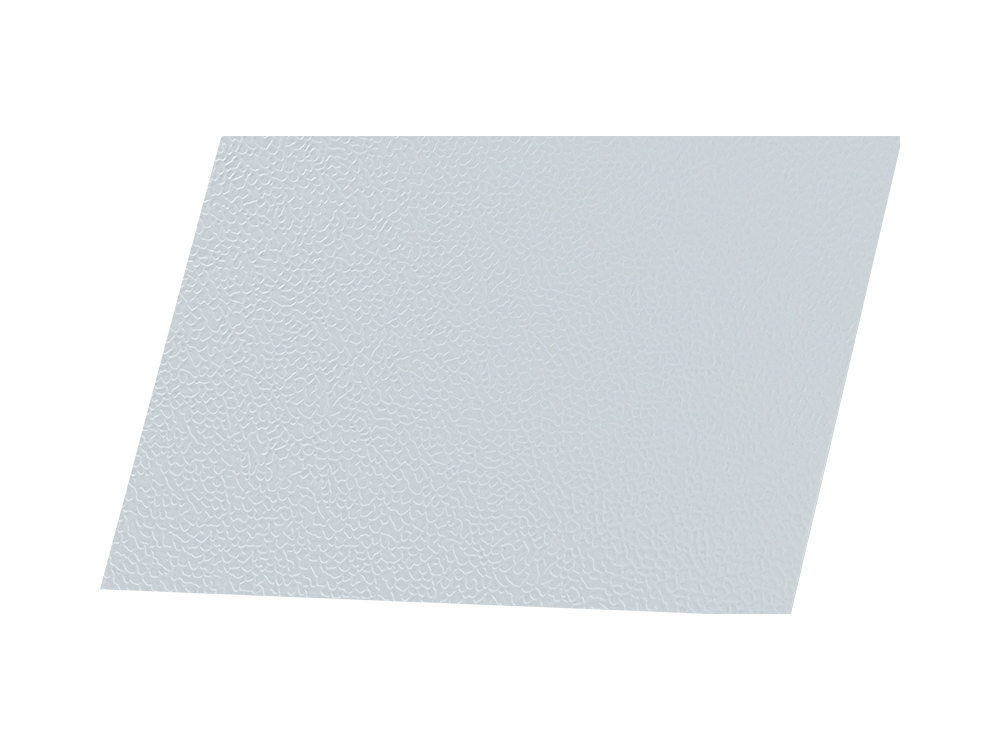 H308 Gemstone Ultra-Matt High-Temperature Release PaperIdeal for PVC and semi-PU leather, this release paper delivers a gemstone texture with very low gloss and adjustable release force, supporting repeated use in production.View Product →
  H518 Large Lychee Matte High-Temperature Release PaperThis grade offers a large lychee grain with a soft matte finish, suited for automotive, flooring, sofa, and luggage leather requiring heat resistance and durability.View Product →
  H808 Plain Super-Matt High-Temperature Release PaperA reusable plain-texture release paper with a super-matt surface, designed for semi-PU and PVC leather applications where flatness and consistent demolding are needed.View Product →
If you need to verify a specific grade against your line conditions, consult the supplier's technical team with the web width, line speed, and resin system.
Whatever grade you choose, verify that static controls are already in place before you change the release paper.
Static Control on High Temperature Release Paper: FAQs
Why does static get worse when the release paper is heated?
Heating lowers the local relative humidity around the web. Dry air removes the moisture layer that helps charge drain, and heated rollers increase the rate of contact and separation. Both effects raise the surface potential.
Should I use static tinsel or an active ionizing bar first?
Start with grounding and humidity, then add static tinsel. If static spikes remain above roughly 2 kV or line speed is high, install an active ionizing bar before the first heated roller and after the last cooling can.
What relative humidity should I target for high temperature release paper?
Target 45-60% RH in the work area. At levels below 35% RH, static charges on release paper become difficult to manage with grounding alone.
Can static damage the release paper surface itself?
Static rarely burns the coating, but the dust it attracts can be pressed into the release surface and cause pin marks or gloss defects. Static discharge can also mark the paper at the unwind station, especially on super-matt finishes.
Static control on high temperature release paper is a series of small adjustments. Measure, adjust, and verify before you change materials.

Feel free to contact us now!
We provide customers with sustainable and environmentally friendly release paper products and services.


-

-
 INDIA DISTRIBUTOR:
 -
 ITALY DISTRIBUTOR:
 -
 PAKISTAN DISTRIBUTOR:
Copyright © Anhui Honghuan New Material Technology Co., Ltd. Rights Reserved.
Custom Casting Release Paper Factory