

 English
 中文简体
中文简体
TURKEY DISTRIBUTOR:
Submit feedback

Release Liner Definition: Backing Paper & Leather Release Paper Uses
Content
- 1 The Core Definition of Release Liners and Backing Papers
- 2 How Release Liners Enable Adhesive Laminates
- 3 What is Leather Release Paper?
- 4 The Multifunctional Capabilities of Leather Release Paper
- 5 Material Types: A Comparative Overview
- 6 Key Selection Criteria for Release Liners
- 7 Practical Applications Across Industries
The Core Definition of Release Liners and Backing Papers
A release liner, also called release paper or adhesive backing paper, is a carrier sheet coated with a non-stick agent—most commonly silicone. Its sole job is to protect a pressure-sensitive adhesive layer until the moment of application. In any adhesive laminate sheet, the liner is the disposable component that peels away cleanly, leaving behind a fully functional adhesive surface that transfers to a substrate without residue or adhesion loss. This definition remains consistent whether you are handling a simple paper sticker, a precision die-cut graphic film, or a heavy-duty industrial tape.
At the material level, a standard paper release liner consists of a densified kraft or supercalendered paper base with a silicone coating on one or both sides. The release performance is measured as the force required to separate the liner from the adhesive, typically expressed in grams per 25 millimetres of width. Depending on the formulation, silicone systems provide release forces ranging from 5 g/25 mm (ultra-light) to over 400 g/25 mm (tight release), but the most common converting grades sit between 10 and 50 g/25 mm. This broad adjustability makes release liners indispensable across converting industries.
How Release Liners Enable Adhesive Laminates
In an adhesive laminate sheet, the release liner is far more than passive protection. It serves as a mechanical stabiliser during high-speed converting operations such as rotary die-cutting, laser profiling, and slitting. Without the liner, the soft adhesive layer would instantly stick to processing rollers and destroy the precision of the cut. The liner’s caliper—often in the range of 60 to 120 g/m² for paper grades—provides the dimensional stability needed to hold intricate kiss-cut shapes in register until the end user performs weeding and application.
The interplay between liner stiffness, release force, and adhesive rheology determines how well a laminate performs in automated dispensing. For instance, a liner with excessive release force can cause the label to pre-dispense or tear, while an under-calendered liner may curl when the adhesive contracts during curing. Premium laminates often use a clay-coated or polyethylene-laminated liner to combine high internal bond strength with controlled surface roughness, ensuring flat lay and consistent peel across the entire sheet width.
What is Leather Release Paper?
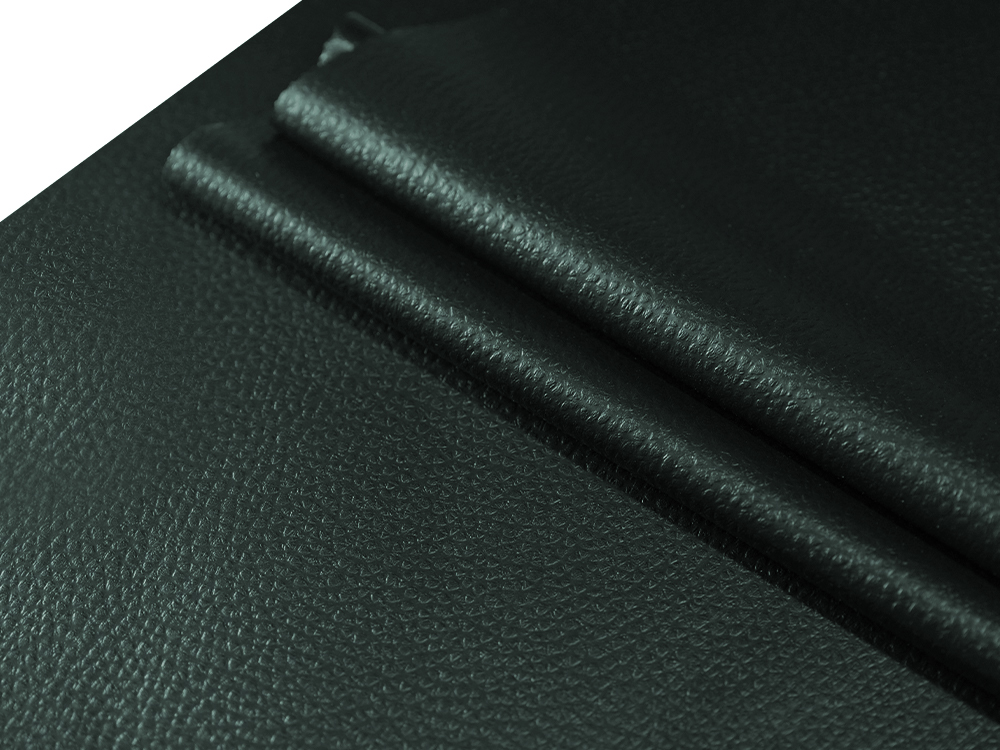
Leather release paper is a highly engineered casting sheet used exclusively in the manufacture of synthetic leather—primarily polyurethane and polyvinyl chloride variants. Unlike standard release liners that merely protect adhesive, leather release paper carries a permanently embossed, negative grain pattern on its surface. When a liquid polymer mixture is coated onto this paper and passed through a heated tunnel, the polymer film cures and simultaneously picks up the inverse texture. The finished synthetic leather then releases from the paper, displaying an exact reproduction of natural leather grains such as crocodile, ostrich, or nubuck.
The base substrate of leather release paper is typically a high-alpha cellulose pulp that has been impregnated with thermosetting resins and heavily calendered. This construction gives it a hard, heat-resistant surface capable of surviving repeated contact with molten polymers. The release coating is often based on chrome complexes or non-silicone proprietary formulas to prevent contamination of the synthetic leather surface, which would interfere with downstream bonding or printing. The paper’s surface hardness and closed structure allow it to be reused multiple times—a critical economic factor in continuous casting lines.
The Multifunctional Capabilities of Leather Release Paper
What leather release paper can do extends well beyond simple carrier functions. It is an active tool that defines the visual and tactile character of the final product. The following capabilities illustrate why it is irreplaceable in synthetic leather production:
- Precision grain embossing. The paper’s surface contains a microscopic negative of the desired leather grain. During casting, the polymer fills every detail, producing pattern fidelity down to the pore level. Premium papers can replicate hair cell structures with a depth resolution of less than 10 microns.
- Gloss and matte control. By varying the paper’s surface topography and coating composition, manufacturers can achieve uniform gloss levels across an entire production run—from dead matte to high gloss—without post‑treatment.
- Thermal endurance. Leather release papers are designed to withstand the intense heat of casting ovens. High‑end grades can endure continuous temperatures of 210°C and peak excursions up to 230°C without delamination or loss of embossing definition.
- Clean, contaminant-free release. The non‑silicone release chemistry ensures that no adhesive-killing residues transfer to the synthetic leather surface, preserving the bond strength of subsequent laminating adhesives.
- Reusability and cost efficiency. Thanks to their resin-impregnated structure, leather release papers can be cycled through the casting process multiple times. In well‑controlled PU leather lines, some papers achieve over 80 production cycles while maintaining acceptable texture sharpness, dramatically lowering the per‑metre cost.
Material Types: A Comparative Overview
Selecting the correct release liner depends on the manufacturing process and end-use requirements. The table below contrasts standard paper liners, film liners, and leather release paper across critical performance dimensions.
| Liner Type | Base Material | Coating | Max. Temperature Resistance | Primary Application |
|---|---|---|---|---|
| Standard Release Paper | Supercalendered kraft or clay-coated paper | Silicone | Up to 180°C | Labels, graphic films, double-sided tapes |
| Film Release Liner | Polyester or polypropylene film | Silicone | Up to 150°C | High-speed die-cutting, medical electrodes |
| Leather Release Paper | Resin-impregnated high-alpha cellulose | Proprietary non-silicone (often chrome-based) | Up to 230°C | Synthetic leather embossing and casting |
The data show that leather release paper occupies a distinct niche where extreme heat resistance, reusable embossing fidelity, and silicone-free release are non‑negotiable. Standard silicone paper and film liners, while dominant in pressure‑sensitive adhesive converting, cannot survive the thermal cycling and chemical exposure of a casting line.
Key Selection Criteria for Release Liners
Engineers and converters evaluate release liners against a checklist of quantifiable properties. Getting these parameters right prevents production downtime and end-user complaints. The most decisive factors include:
- Release force profile. The force needed to peel the liner must match the application. For a high-speed automatic labelling line, a consistent release value between 10 and 20 g/25 mm is ideal. For a heavy‑duty transfer adhesive, a tighter release of 40 to 80 g/25 mm prevents premature liner detachment during handling.
- Caliper and basis weight. Paper liners typically range from 0.05 mm to 0.15 mm in thickness. A thicker liner improves die‑cutting accuracy but may increase the roll diameter, limiting how many labels fit on one reel. The common basis weight for label facestock liners is 62 to 65 g/m², offering a workable compromise.
- Temperature rating. The liner must withstand the highest thermal load in the process. A silicone‑coated PET film liner will fail above 150°C, while leather release paper can tolerate 230°C, making it the only viable choice for PVC casting where ovens operate at 190‑210°C.
- Surface roughness and air bleed. For large‑format adhesive sheets, a slightly textured liner surface creates microscopic air channels that ease bubble‑free application. Conversely, optically clear adhesives demand an ultra‑smooth liner to avoid haze transfer.
- Dimensional stability. Moisture absorption or internal stresses can warp a liner. Resin‑impregnated leather release papers and biaxially oriented film liners offer superior flatness, critical for registration in multicolour printing and precision plotting.
Practical Applications Across Industries
The versatility of release liners makes them invisible enablers in a wide array of products. Self‑adhesive labels and barcode stickers are the most recognisable use case, where the liner allows high‑speed dispensing without adhesive contamination. In the medical sector, hydrogel electrode pads rely on film release liners to maintain sterility and tack until they are placed on the patient. Advanced composites use release papers as interleaving sheets between prepreg layers, preventing the resin from curing onto the storage roll.
Synthetic leather manufacturing remains the most specialised domain. Here, the release paper is not merely a carrier but a critical tool that determines the product’s aesthetic and tactile quality. An automobile interior panel, for example, derives its leather‑like grain entirely from the pattern engraved on the release paper. A furniture‑grade PU leather gains its consistent matte finish and soft hand feel because the release paper imparts both texture and precise gloss modulation. Without leather release paper, the mass production of realistic, durable synthetic leather at competitive cost would be impossible.

Feel free to contact us now!
We provide customers with sustainable and environmentally friendly release paper products and services.


-

-
 INDIA DISTRIBUTOR:
 -
 ITALY DISTRIBUTOR:
 -
 PAKISTAN DISTRIBUTOR:
Copyright © Anhui Honghuan New Material Technology Co., Ltd. Rights Reserved.
Custom Casting Release Paper Factory